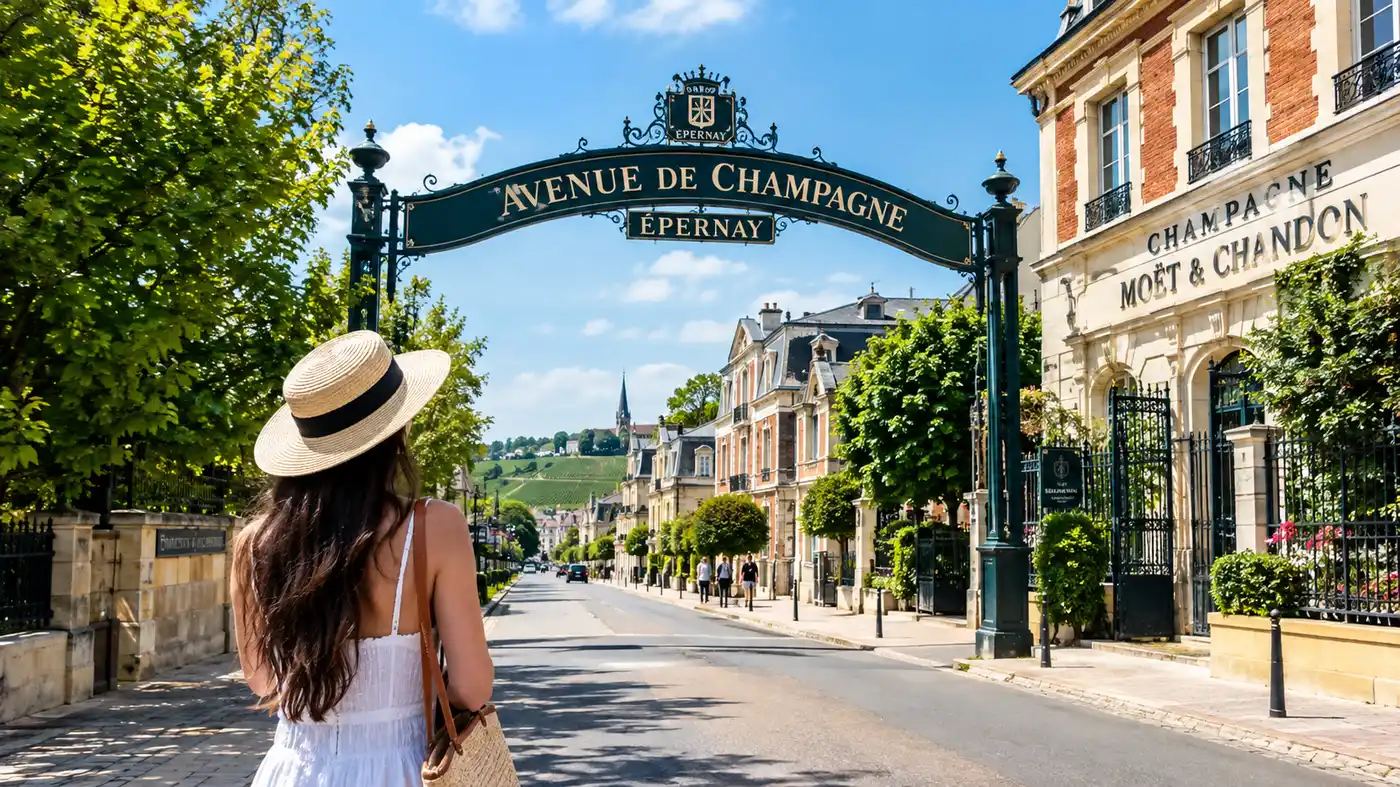
Epernay Champagne Tours Visit the Avenue De Champagne
Most people step off the train from Paris, walk five minutes past the modest brick townhouses of Place de la République, and stop dead in their tracks. The Avenue de Champagne stretches east for nearly a mile, lined with Renaissance revival mansions, limestone balustrades, and manicured courtyards that look like miniature royal palaces. Beneath your sneakers lies a maze of damp chalk tunnels holding somewhere around 200 million bottles of aging wine. Booking proper epernay champagne tours is the fastest way to get beneath that limestone surface, where you swap the bright sun for twelve-degree cellars that smell faintly of moss, yeast, and cold stone.
The street was originally called the Voie de Commerce, linking France to Germany back in the mid-1700s. When merchants realized the underground chalk quarries stayed at a steady 50 to 54 degrees Fahrenheit all year, the wine barons moved in and built extravagant estates above their subterranean vaults. Today, the avenue de champagne in epernay functions as the operational heart and symbolic showroom of the entire region. Whether you want to sit under horse chestnut trees sipping a crisp blanc de blancs or descend thirty meters underground into damp limestone galleries, this guide walks through how to plan your visits, choose the right houses, and avoid the standard tourist slip-ups.
Book your champagne tours from paris experience:
Walking the Avenue of Champagne: What to Expect Above and Below Ground
The avenue itself is wide, clean, and surprisingly quiet in the early mornings before the tasting salons unlock their iron gates around 10:00 AM. Walking the avenue of champagne from end to end takes about twenty minutes at an easy pace. You will pass Moët & Chandon right at the western start, followed by Perrier-Jouët, Boizel, Pol Roger, and de Venoge, before the grand estates taper off into leafy residential lanes near Mercier.
Above ground, you see private châteaux with slate mansard roofs, gravel driveways swept clean by groundskeepers, and wrought-iron crests painted in gold leaf. Underground, it feels like an entirely different planet. The chalk under Epernay was carved out centuries ago, leaving soft, white walls that still show pickaxe marks from the 1800s. It was built this way because the porous stone naturally regulates humidity at roughly 90 percent, creating the exact microclimate sparkling wine needs to rest on its lees without spoiling.
Pro tip: Bring a wool sweater or a light packable down jacket, even if it is 88 degrees outside on the street. The underground temperature sits at 50 degrees Fahrenheit (10 Celsius) constantly, and after forty minutes underground on damp concrete, your sandals and t-shirt will betray you.
I learned the hard way on my first visit. I wore linen trousers and canvas shoes. By minute twenty-five of the tour, my teeth were chattering so loudly I could barely concentrate on the guide explaining remuage. Do not make that mistake.
If you find yourself torn between basing your trip here or further north, our breakdown on Reims or Epernay helps clarify the differences, but for pure walkability, Epernay wins every single time. Everything along this boulevard is clustered together, so you do not need taxis or rental cars once you arrive.
Top Houses for Epernay Champagne Tours
Choosing which houses to visit along the avenue champagne epernay can induce analysis paralysis because each offers distinct cellar architecture and tasting tiers. Some lean heavily into high-tech light projections and electric trams, while others walk you down raw stone corridors where black molds thrive on damp corners.
Moët & Chandon runs the largest operation on the strip. Their cellars run for roughly 17 miles beneath the pavement, making them the largest underground network in the region. Booking ahead for the Moët & Chandon cellars is mandatory, as peak weekend slots vanish two months in advance. The tour here is polished, efficient, and concludes in a sleek salon where you can taste their grand vintage bottlings.
A few doors down sits Champagne Boizel, a family-owned house founded in 1834. Their cellar tour takes you into their historic "Cave Trésor," which holds dusty bottles dating back to 1834. It feels significantly more personal here than at the corporate titans. The groups are smaller, often capped at ten or twelve guests, which leaves room to ask weird, specific questions about dosage and reserve wines.
Champagne de Venoge occupies the stunning Hôtel Gallice, constructed in 1899. Even if you do not take their subterranean cellar tour, their tasting bar, L'Écurie, sits inside the converted stables out back. You can order flutes by the glass alongside charcuterie boards, lounging on velvet chairs under the chandeliers or out on the gravel terrace.
| Champagne House | Tour Duration | Starting Price | Cellar Atmosphere | Standout Feature |
|---|---|---|---|---|
| Moët & Chandon | 90 minutes | €40 | Vast, dark, grand historic tunnels | 17 miles of chalk cellars and Dom Pérignon ties |
| Champagne Boizel | 75 minutes | €32 | Intimate, family-oriented, artisanal | Tasting room overlooking the stainless fermentation vats |
| Champagne Mercier | 60 minutes | €27 | Modern, multimedia, subterranean tram | Giant 200,000-bottle barrel carved for the 1889 World's Fair |
| Champagne de Venoge | 60 minutes | €38 | Upscale, boutique mansion styling | Tasting in the historic stable courtyard |
| Champagne Comtesse Lafond | 75 minutes | €35 | Classic 19th-century château cellars | Picturesque grounds and saber bottle-opening demos |
Mercier sits at the far eastern end of the epernay avenue de champagne. Eugène Mercier founded it with a populist vision, aiming to make sparkling wine accessible to everyday people rather than just European aristocrats. To prove his point, he built an enormous oak tun that held the equivalent of 200,000 bottles, dragging it to Paris with twenty-four oxen for the 1889 World's Fair. Today, you take a glass elevator down into the quarry and board an automated laser-guided train that whisks you through decorated chalk chambers. It is slightly touristy, maybe even a little kitschy, but families with older kids or visitors with mobility issues love it.
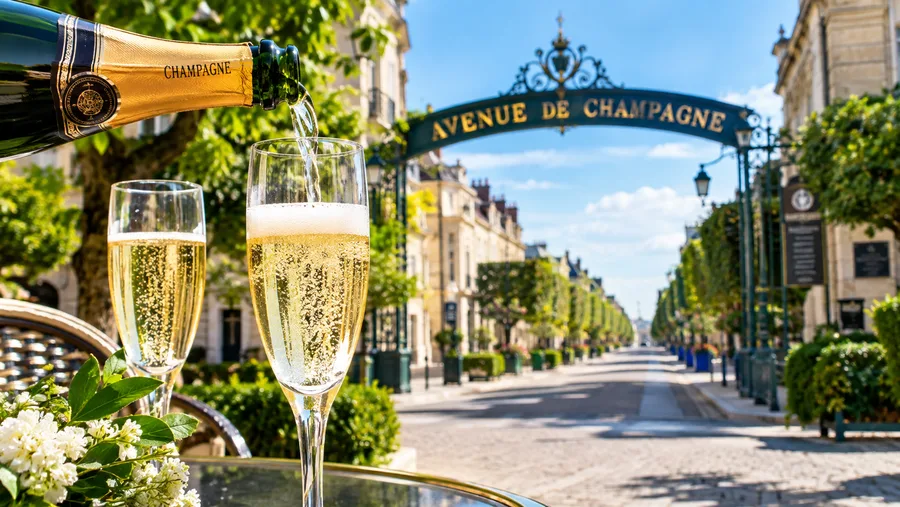
Planning Your Champagne Tour Epernay: Booking Windows and Timing
Turning up on a Saturday morning expecting to walk into any major cellar for a tour is an easy way to spend your afternoon drinking coffee alone at a train station bistro. While walk-in tastings by the glass are frequently available in the courtyard bars, full guided cellar tours require reservations.
Note: Almost all traditional production cellars along the avenue shut down public tours during the harvest period, which generally runs for two weeks between late August and late September depending on the summer heat. The outdoor bars remain open, but cellar machinery is running full-tilt, making tours a safety hazard.
When mapping out your day, follow these practical steps to prevent sensory fatigue:
- Book morning cellar visits: Your palate is freshest between 10:30 AM and noon before coffee, garlic, and lunch butter coat your tongue.
- Cap yourself at two tours: Chalk tunnels look surprisingly similar after the third hour, so book one big historical house and one smaller producer.
- Schedule 90-minute gaps: Distances between estates look short on paper, but cellar tours frequently run ten minutes long, and sipping your tasting flutes should never feel like a race.
- Reserve weekday slots: Tuesdays through Thursdays see roughly half the foot traffic of Saturdays, meaning smaller tour groups and friendlier guides.
Two tours and an outdoor terrace tasting is the sweet spot. If you try to pack four cellar visits into eight hours, the damp chill gets into your bones, the historical dates run together, and your palate burns out from the high acidity typical of young Champagne wines.
Book your champagne tours from paris experience:
Independent Growers Near the Avenue de Champagne
The grandes marques dominate the storefronts along the avenue champagne, but smaller grower-producers - known locally as récoltant-manipulants - offer a contrasting perspective that many wine drinkers prefer. These vignerons grow grapes on their own family parcels and bottle wine directly on-site, instead of purchasing fruit across dozens of villages like the massive houses do.
You can identify these growers by the tiny letters "RM" printed on the bottom corner of the bottle label, compared to "NM" (négociant-manipulant) on the commercial brands. Tt is worth seeking them out. Just off the main avenue champagne epernay, down side streets like Rue des Archers and Rue Jean Chandon Moët, you will find independent tasting rooms where the person pouring your glass might be the winemaker's nephew or the cellar master herself.
There is also the Syndicat Général des Vignerons on Avenue Henri-Martin, an easy eight-minute stroll from the main drag. Several cooperative tasting rooms let you compare three single-vineyard bottlings from tiny villages like Cumières, Avize, or Hautvillers side-by-side. The prices here reflect reality rather than global marketing budgets. A complex, five-year-old vintage bottle from an artisan producer often costs around €28 to €36, whereas a basic non-vintage bottle from an iconic luxury house on the main strip starts around €55.
Honestly, some of my favorite bottles were discovered while sitting on a rickety iron stool in a side-alley courtyard, eating salted almonds while an elderly vigneron poured a zero-dosage pinot meunier that tasted like toasted brioche and green apples.
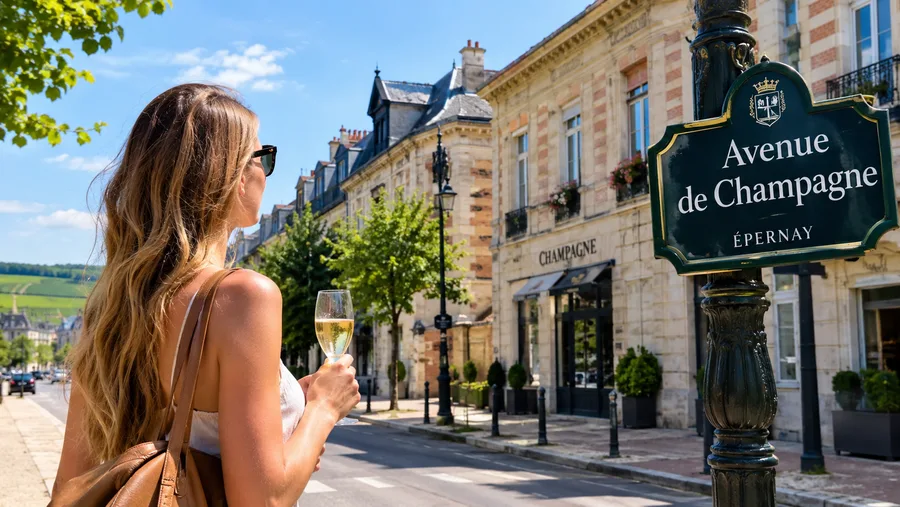
Logistics: Getting to Epernay and Moving Around
Epernay is absurdly easy to reach from Paris. Regional TER trains depart Paris Gare de l'Est several times each morning, delivering you straight to Epernay station in about one hour and fifteen minutes. A standard one-way ticket costs between €18 and €29 if you book a week or two in advance through the SNCF Connect app.
When your train pulls into Epernay, exit through the front doors, cross the small plaza, and head up Rue Gambetta. Within seven minutes on foot, you hit the avenue de champagne. You genuinely do not need a vehicle if you are staying in the town center.
- Foot travel: The entire central wine district is walkable on flat sidewalks, though wearing comfortable flat shoes is non-negotiable due to slick cobblestones and wet cellar grates.
- Electric bike rentals: Several bike shops near the tourist office rent e-bikes for roughly €35 per half-day, which are fantastic for pedaling through the vineyards up to Dom Pérignon's tomb in Hautvillers, four miles away.
- Local taxis: Taxis do not cruise the streets waiting for hails. If you want a ride to an outlying village estate, have your hotel desk or tasting host ring a local driver at least an hour in advance.
For lunch between visits, skip the tourist cafes situated directly on the avenue de champagne epernay. Walk two streets over to Place Hugues Plomb or Rue Flodoard. You will find small brasseries serving hearty regional dishes like potée champenoise (a stew of cabbage, pork, and sausages) or warm chaource cheese on toasted country bread for under €20. Pair that with a local Coteaux Champenois still red wine to give your palate a quick break from the carbonation before your afternoon tastings.
Frequently Asked Questions about epernay champagne tours
How far in advance do I need to book tours on the Avenue de Champagne?
For top tier houses like Moët & Chandon or Perrier-Jouët, you should book at least four to six weeks in advance for spring through autumn visits. Smaller houses and walk-in tasting courtyards like de Venoge often accommodate visitors with one or two days' notice, or even on the spot for outdoor drinks.
Can I visit the Avenue de Champagne without booking a guided tour?
Yes. The street itself is open public space. You can stroll down the avenue, admire the grand architecture, and walk straight into several courtyard tasting bars - such as those at Boizel, de Venoge, or Collard-Picard - to order champagne flights by the glass without any cellar tour reservation.
Is it better to stay in Reims or Epernay for champagne visits?
Epernay is better if you want a quiet, intimate town where you can walk everywhere without a car and stay surrounded by vineyards. Reims is better if you prefer larger gothic architecture, fine-dining Michelin restaurants, and big city amenities.
Quick Reference
- Train ride: 75 minutes from Paris Gare de l'Est
- Cellar climate: 50°F (10°C) year-round; pack warm layers
- Tasting flight costs: €18 to €45 across most estates
- Avenue length: 0.6 miles of historic estates
- Best walking hours: 10:00 AM to 5:00 PM
Book your champagne tours from paris experience:
My Take
There is an intoxicating charm to Epernay that Reims simply cannot replicate. Reims has the magnificent cathedral, certainly, but Epernay feels like a country town that happens to be sitting on top of the world's most glamorous wine bank. Walking out of a cold, damp, silent cellar carved from chalk into the soft golden sunlight of late afternoon on the avenue, glass in hand, is one of France's great travel rituals. Pick two contrasting houses, leave your afternoon open for an unplanned stop in an alleyway courtyard, and remember to carry that extra sweater down into the dark.
Read more about champagne tours from paris.